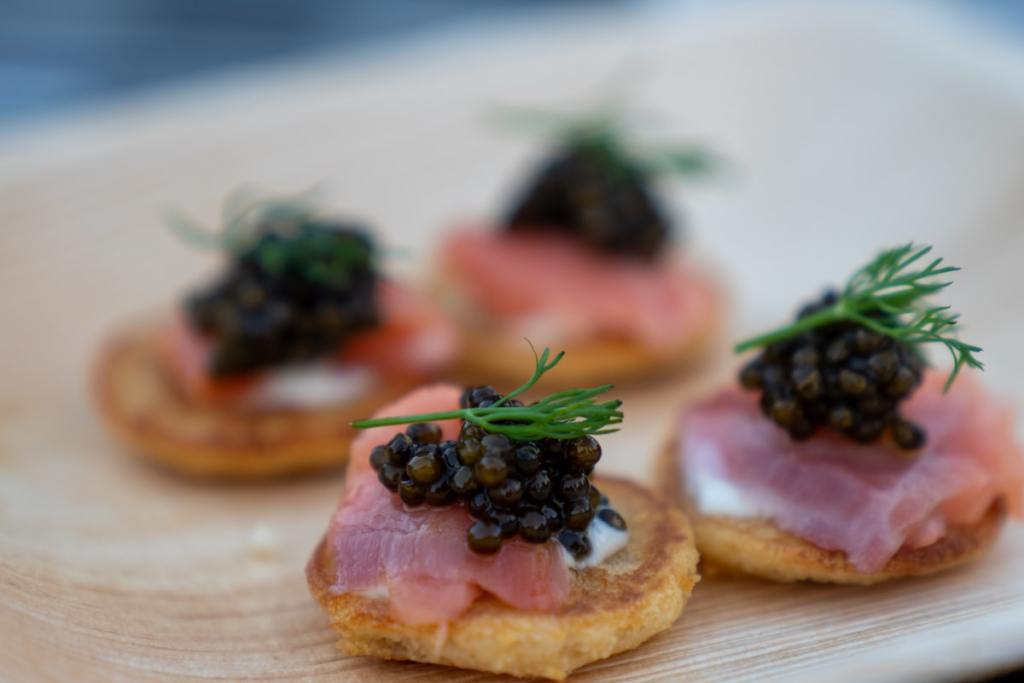
A restaurant menu is not just a list of what you serve. It is a collection of financial decisions — some intentional, many inherited — that determines what your guests order and, ultimately, how much margin flows to the bottom line. Menu mix optimization is the discipline of understanding which items your guests actually order versus which items you want them to order, and closing the gap between the two through design, placement, promotion, and pricing.
The average restaurant menu has a wide range of margin performance across its items. Some dishes carry 70 percent or higher gross profit margins. Others barely break even after food cost. When guests are left to order without any guidance or design influence, they tend to distribute their choices in ways that do not necessarily favor the high-margin items. Menu mix optimization changes that distribution deliberately.
Understanding Your Current Mix
The starting point is a sales mix report — a breakdown, available from your POS, of how many of each item sold over a defined period and the revenue and cost associated with each. Most operators review total sales. Fewer look at item-level sales alongside item-level food cost, which is the combination that reveals the actual margin profile of what guests are ordering.
Sort your menu items by two dimensions: how often they sell (popularity) and what they contribute per sale (margin). This produces four categories — the same framework as menu engineering, sometimes described as Stars, Plowhorses, Puzzles, and Dogs. The items that are both popular and high-margin are Stars. Items that are popular but low-margin are Plowhorses. High-margin items that do not sell well are Puzzles. Low-margin and low-popularity items are Dogs.
Understanding where each menu item sits in this matrix tells you where your mix optimization energy should go. The goal is not to eliminate Plowhorses — guests love them and they drive volume. The goal is to make sure your menu design, staff training, and promotion are directing guests toward Stars wherever possible, while addressing why Puzzles are not selling and whether Dogs should remain on the menu at all.
Menu Design as a Mix Management Tool
Guests do not read menus the way they read documents. They scan. Research on menu reading patterns consistently finds that guests spend very little time with a menu — often less than two minutes — and their attention is concentrated in a few predictable areas: the top-right corner of a two-page spread, the first and last items in each section, and anything that is visually distinguished from surrounding items.
This is actionable information. Placing high-margin Stars in the attention hotspots — top-right of the main section, first item in each category — increases their selection rate without any additional promotion or price change. Visually distinguishing these items with a box, a different font treatment, or a photography element further increases attention and selection.
The opposite is also true: Puzzle items — high-margin but underordered — may be buried in a position on the menu that gets low attention. Relocating them to a higher-attention position frequently increases their sales without any other change.
Staff as a Mix Management Tool
Your service team is the most powerful menu mix tool you have, and the most underutilized. A server who recommends specific dishes — genuinely, specifically, and knowledgeably — influences what gets ordered far more effectively than any menu design change. A recommendation from a trusted server carries social proof, specificity, and personal conviction that a menu description cannot replicate.
Training staff to recommend your Stars specifically — not “everything is great” but “the branzino tonight is exceptional, the kitchen is doing something really interesting with the sauce” — shifts the mix meaningfully. Pre-shift tastings that keep the team current on what is best, what is seasonal, and what the kitchen is proud of are an investment in mix management as much as they are a hospitality practice.
Eliminating Items That Hurt More Than They Help
Menu length is itself a mix management variable. A menu with 45 items creates more operational complexity, more inventory carrying cost, and more opportunity for inconsistency than a menu with 28 items. It also dilutes attention across more options, which reduces the ability to guide guests toward your best items.
Every item on the menu that is a Dog — low margin, low popularity — is consuming kitchen preparation time, inventory carrying cost, and menu real estate that could be occupied by a better-performing item. The test is simple: if you removed this item from the menu, would any meaningful number of guests choose not to come? If the answer is no, the item is a candidate for removal.
Streamlining the menu is one of the few changes that simultaneously reduces food cost (fewer SKUs, better purchasing efficiency), reduces labor cost (simpler prep, faster execution), and improves guest experience (easier decision, faster table turns). The resistance to doing it is almost entirely psychological — operators feel they are removing options from guests who might want them. The data almost always tells a different story.
The author is a former CFO for a multi-unit restaurant brand. RestaurantBottomLine.com is dedicated to helping independent operators protect their financial model.
 PROTECTING THE BOTTOM LINE