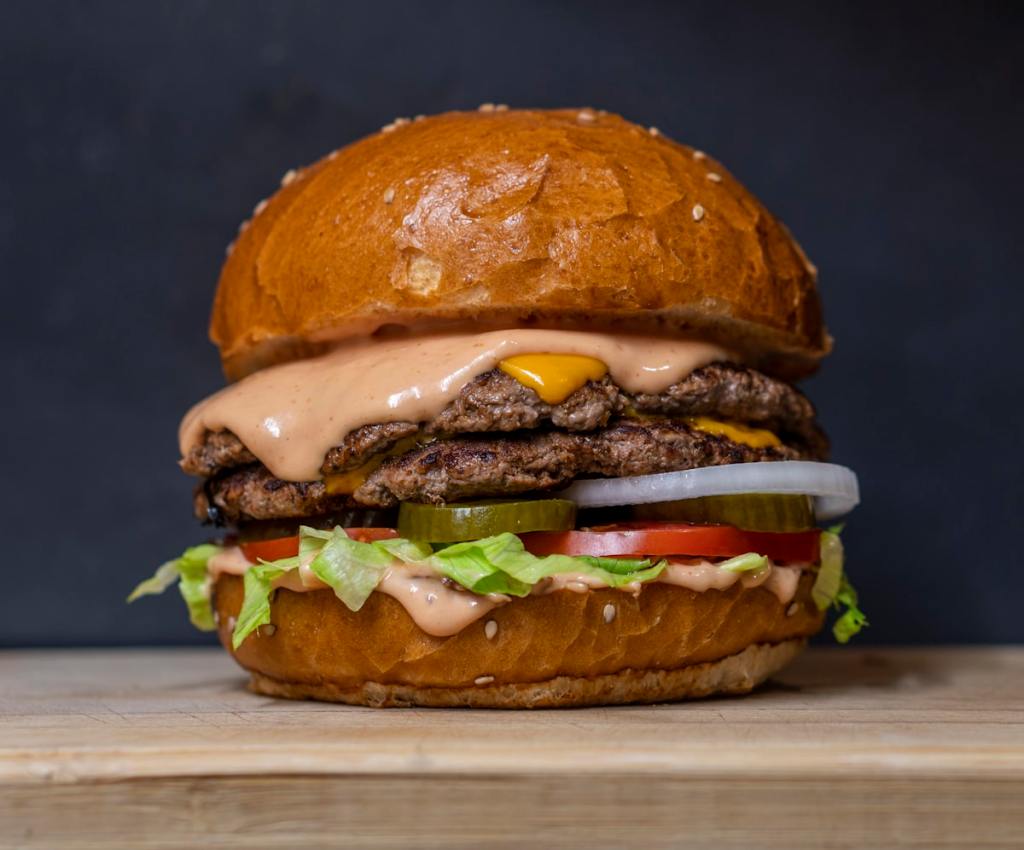
Most restaurant menus start as a creative exercise. The chef wants to cook what excites them. The owner wants to offer variety. Someone’s uncle suggests adding a burger because “everyone loves burgers.” Over time, the menu grows organically, shaped by instinct, customer requests, and the path of least resistance. What it almost never gets shaped by is the actual financial performance of each item — what it costs to make, what it actually contributes to your bottom line, and how often guests choose it. Menu engineering changes that. It takes your menu from an aesthetic document and turns it into a financial tool.
The framework behind menu engineering comes from a simple idea: not all menu items are created equal, and the two dimensions that matter most are contribution margin and sales volume. Contribution margin is the dollar profit you keep after food cost — it’s not the same as food cost percentage, and that distinction matters more than most operators realize. Sales volume is simply how many of a given item you sell in a given period. When you plot every item in your menu on those two axes, you get four quadrants. And each quadrant tells you something different about what to do next.
The Four Quadrants
Stars are the items every operator wants more of: high popularity and high contribution margin. These are the dishes guests love and that actually make you money. Your instinct might be to mess with them — update the presentation, tweak the recipe, play with the price. Resist it. Stars should be protected. Feature them prominently on the menu. Train your servers to recommend them. Make sure they’re always available and executed consistently. Stars are your financial foundation.
Plowhorses are the workhorse items: high popularity but low contribution margin. Guests order them constantly, but the margin you’re capturing on each sale is thin. This can happen for several reasons — the food cost is genuinely high (a dish with expensive protein or imported ingredients), the price is set too low relative to the market, or both. The fix for a Plowhorse isn’t to cut it — that’s a good way to frustrate your regulars. Instead, you need to understand why the margin is low. Can you re-engineer the recipe without guests noticing? Can you raise the price by $1.50 or $2 without killing demand? Even a modest price increase on a high-volume item compounds quickly.
Puzzles are items with high contribution margin but low popularity. The margin is there — if guests ordered this dish, you’d make good money. They just don’t order it. That’s a menu design problem, a description problem, or a server recommendation problem. It’s rarely a product problem. A Puzzle that gets moved to a more prominent position on the menu, paired with a compelling description, and recommended by your servers at pre-shift will often convert into a Star within a quarter.
Dogs are the items with low popularity and low contribution margin. They’re not selling, and when they do sell, you’re not making much on them. These items are candidates for removal or complete reinvention. Before you cut a Dog, ask two questions: is it there for a reason (dietary restriction coverage, a signature that defines your concept)? And is there a way to fundamentally change it so it moves into a different quadrant? If the answer to both is no, it probably shouldn’t be on your menu.
How to Run the Analysis
You need two numbers for every item on your menu: contribution margin and sales volume over a defined period. Four weeks is a reasonable starting point — long enough to smooth out one-off events, short enough to reflect your current reality.
Contribution margin is calculated by taking the selling price and subtracting the food cost in dollars. Let’s walk through a concrete example. Suppose you have a pan-seared salmon on your menu priced at $18. Your food cost percentage on that dish is 35%, which means your food cost in dollars is $6.30. The contribution margin is $18.00 minus $6.30, which equals $11.70. That $11.70 is the actual dollar contribution that dish makes toward your labor, rent, and profit every time it goes out the door.
Now compare that to a pasta dish priced at $14 with a 22% food cost. The food cost in dollars is $3.08, and the contribution margin is $10.92. The pasta has a better food cost percentage than the salmon, but the salmon contributes $0.78 more per plate. If you sell 80 salmon and 200 pasta in a given week, you’re pulling $936 from salmon and $2,184 from pasta in contribution margin. The pasta is a Plowhorse. The salmon might be a Star or a Puzzle, depending on how it compares to your overall averages.
The key is to calculate these numbers for every item and then find your averages — your average contribution margin across all items, and your average sales volume. Items above average on both axes are Stars. Above average margin, below average volume: Puzzles. Above average volume, below average margin: Plowhorses. Below average on both: Dogs. Your POS system can pull the volume data. Your recipe costing tool — or even a well-built spreadsheet — handles the margin calculation.
What to Do With What You Find
Once you’ve run the analysis, the actions become fairly clear. Stars get featured in the prime real estate on your menu — top of sections, callout boxes, server recommendations at every table. You’re not just protecting them; you’re actively selling them. Plowhorses get a detailed recipe audit. Pull apart every component of the dish and ask where the cost is coming from. Is there a protein substitution that maintains quality but drops cost? Is there a preparation change that reduces waste? And is the current price actually aligned with what your market will bear? A $1 to $2 price increase on a high-selling Plowhorse can be the difference between thin margin and acceptable margin.
Puzzles need visibility and advocacy. Move them higher on the menu. Rewrite the description to be more evocative and specific — “house-made mushroom risotto with aged parmesan and black truffle oil” outperforms “mushroom risotto” every time. Then make them a talking point at pre-shift: “Tonight we’re pushing the halibut. Here’s what makes it special. If a table seems undecided, lead with it.” Server recommendation is one of the most powerful distribution channels you have for Puzzle items.
Dogs need a harder conversation. If an item has been on your menu for two years and consistently underperforms on both volume and margin, you have to ask why it’s still there. Sentiment is not a business reason. “We’ve always had it” is not a business reason. If the item can be relaunched with a fundamentally different recipe, price, or positioning, try it. If not, pull it. A shorter, more focused menu is almost always better for execution, food cost, and guest experience than a sprawling one built on legacy decisions.
Menu Engineering Is Not a One-Time Exercise
The operators who do one menu engineering analysis and then shelve the results are missing the point. Your menu is not a static document. Food costs shift — sometimes dramatically — when commodity prices move. Seasonality changes what guests want to order and what you can source affordably. Server behavior shapes what sells: when a new hire joins your team and happens to love recommending a particular dish, that item’s volume will go up. When you launch a new item and train heavily on it, other items might drift down.
A quarterly cadence is realistic for most independent operators. Pick a four-week window, pull your data, run the matrix, and make decisions. It doesn’t have to be a major production — once you’ve built the spreadsheet or the workflow, the analysis itself takes a few hours. The decisions it produces, though, can move your average check, reduce your food cost percentage, and simplify your kitchen’s execution all at once. That’s the compounding value of treating your menu as a financial tool rather than a creative artifact.
The menu sitting on your tables right now is either working for you or against you. Menu engineering is how you find out which — and how you shift the balance.
The author is a former CFO for a multi-unit restaurant brand. RestaurantBottomLine.com is dedicated to helping independent operators protect their financial model.
Related Reading
To dive deeper into restaurant profitability metrics, explore our guides on growing your check average, understanding prime cost, and managing ideal vs. actual food cost.
Menu engineering is math, not art. Once you know which dishes are actually profitable, the Restaurant Finance Toolkit’s Food Cost Calculator helps you track profitability by item and adjust pricing or recipes accordingly.
Engineer your menu with real cost data. Get the Restaurant Finance Toolkit →
 PROTECTING THE BOTTOM LINE